
Pattern Hair Loss and Reduced Hair Density
A comprehensive treatment plan tailored to manage male pattern hair loss by reducing hair fall, improving scalp coverage, and promoting healthier hair growth before considering surgical intervention.
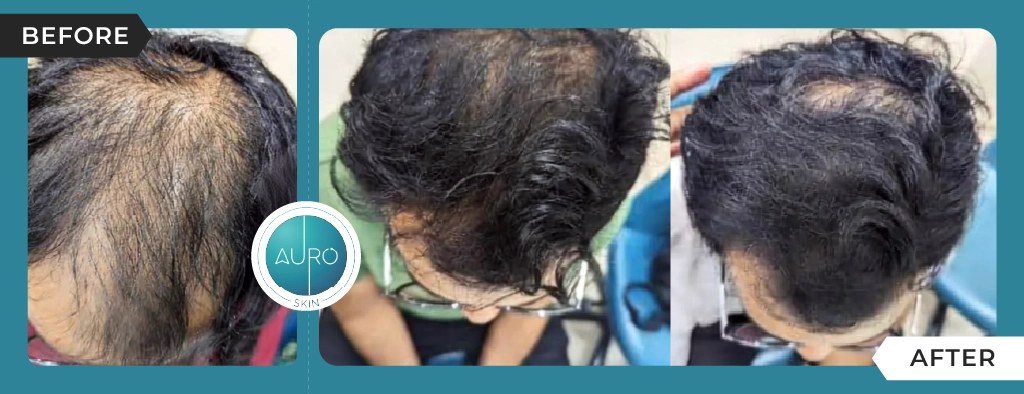
Patient overview
Age
29
Gender
Male
DURATION
3 Years
DIAGNOSIS
Androgenetic Alopecia
A 29-year-old patient presented with progressive hair thinning and reduced hair density, giving the appearance of early balding. The condition had affected his confidence and led to social discomfort.
Clinical evaluation confirmed androgenetic alopecia (male pattern hair loss). Although he initially consulted for a hair transplant, we recommended a personalised medical treatment plan to control hair fall and improve hair density.
Over the course of treatment, the patient experienced noticeable improvement in scalp coverage, helping delay the need for a hair transplant while restoring his confidence.
Problem & Challenges
Gradual hair thinning and reduced scalp coverage made early balding increasingly noticeable in the patient. The visible changes affected the patient’s confidence and led to social discomfort, prompting him to seek professional advice for hair treatment, with the expectation that a hair transplant would be required.
- Progressive hair thinning and reduced hair density
- Diffuse scalp thinning consistent with androgenetic alopecia
- Visible signs of early balding
- Reduced confidence and self-consciousness
- Social discomfort due to changes in appearance
- Increased hair shedding during washing and combing
Step-by-Step Treatment Plan
Initial Consultation
The patient initially consulted for a hair transplant to address progressive hair thinning and reduced hair density.
Clinical Evaluation
Following a detailed scalp assessment, Dr. Avina, an experienced dermatologist in Mumbai, diagnosed androgenetic alopecia and recommended medical management as the first-line treatment based on the stage and pattern of hair loss.
Personalised Medical Treatment
A structured non-surgical hair loss treatment plan was initiated to control hair fall, improve hair density, and support healthier hair growth while addressing the patient's individual concerns and treatment goals.
Progress Monitoring
The patient's response was monitored through regular follow-up consultations, allowing the treatment plan to be reviewed and adjusted based on his clinical progress.
Treatment Outcome
As hair fall reduced and scalp coverage improved, the patient continued with the prescribed treatment plan, helping delay the need for a hair transplant while restoring confidence.
Treatment Response
Clinical Outcomes
- Noticeable reduction in hair fall
- Improved hair density and overall scalp coverage
- Visible improvement in the appearance of early balding
- Hair transplant successfully delayed through medical management
Patient Outcomes
- Increased confidence in daily and social interactions
- Reduced self-consciousness about hair appearance
- Greater satisfaction with the treatment outcome
- Reassurance that hair loss could be managed without surgery