Recurrent Ingrown Hairs, Boils, and Pigmentation
A personalised treatment plan for managing recurrent ingrown hairs, boils, and post-inflammatory pigmentation on the legs, while improving skin texture and reducing the visible appearance of “strawberry legs”.
Patient overview
Age
28 Years
Gender
Female
DURATION
Chronic and recurrent
DIAGNOSIS
Recurrent ingrown airs & pigmentation
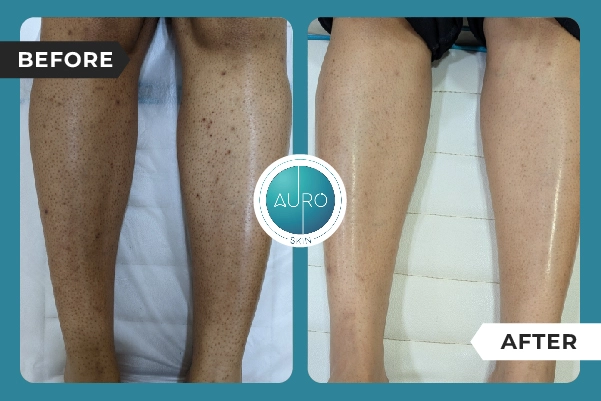
A 28-year-old patient presented with recurrent ingrown hairs, boils, and dark marks on her legs. The repeated inflammation had resulted in uneven skin texture and a visible “strawberry legs” appearance, characterised by small dark spots.
The condition had persisted over time and was aggravated by frequent scratching, which contributed to increased pigmentation. The patient also felt self-conscious about her legs and preferred keeping them covered, particularly when wearing shorter clothing.
Clinical evaluation indicated recurrent ingrown hair associated with folliculitis and post-inflammatory hyperpigmentation. A personalised treatment plan was recommended to address the underlying hair growth pattern, control inflammation, and improve pigmentation and skin texture.
Problems & Challenges
Recurrent ingrown hairs and boils were causing ongoing inflammation and visible marks on the patient’s legs. The persistent nature of the condition affected both her skin texture and confidence, leading her to seek professional laser hair removal treatment.
- Recurrent ingrown hairs and follicular inflammation
- Repeated boils on the legs
- Post-inflammatory hyperpigmentation and dark marks
- Uneven skin texture with a “strawberry legs” appearance
- Scratching that aggravated pigmentation and irritation
- Self-consciousness about exposing the legs
Step-by-Step Treatment Approach
Initial Consultation
The patient consulted Dr. Avina for recurrent ingrown hairs, boils, and persistent pigmentation affecting the appearance and texture of her legs.
Clinical Evaluation
Clinical evaluation by the skin specialist in Mumbai indicated recurrent folliculitis with post-inflammatory hyperpigmentation. A personalised treatment plan was recommended based on her skin condition.
Patch Testing and Initial Treatment
A patch test was performed to assess the skin's response before proceeding. Treatment was initially started on a smaller area of the hands to evaluate tolerance and clinical response.
Laser Hair Removal Treatment
After satisfactory initial results, treatment was extended to the legs. Laser hair removal sessions were performed to reduce unwanted hair growth and help minimise the recurrence of ingrown hairs.
Folliculitis and Pigmentation Management
Recurrent folliculitis treatment was used to control boils and follicular inflammation, alongside treatment to improve pigmentation and skin texture. Progress was monitored throughout the treatment course.
Treatment Outcome
Over 7–8 sessions, the patient experienced a significant reduction in ingrown hairs and boils, along with visible improvement in marks and skin texture.
Treatment Response
Clinical Outcomes
- Significant reduction in recurrent ingrown hairs and boils
- Reduced episodes of follicular inflammation
- Visible improvement in pigmentation and dark marks
- Improved skin texture and reduced “strawberry legs” appearance
- Less scratching due to improvement in symptoms
Patient Outcomes
- Greater comfort with the appearance of her legs
- Reduced self-consciousness about visible marks
- Increased confidence when wearing shorter clothing
- Improved satisfaction with the overall skin appearance