
Depigmented Patches on the Back of the Neck
A personalised treatment approach for managing vitiligo affecting the posterior neck, with a focus on stabilising depigmentation, supporting repigmentation, and helping the patient feel more comfortable with her condition.
Patient overview
Age
65 Years
Gender
Female
DURATION
During the COVID period
DIAGNOSIS
Vitiligo
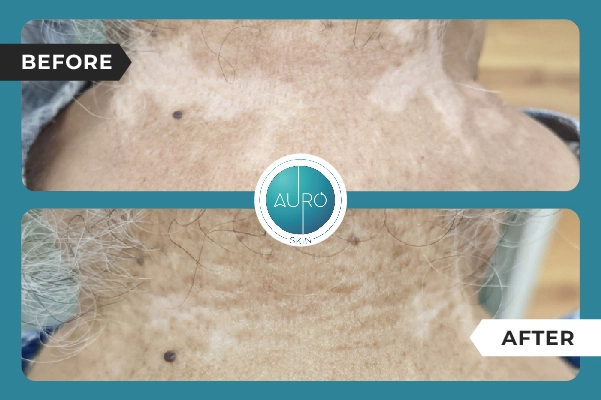
A 65-year-old female patient presented with depigmented patches on the back of her neck that had developed and progressed during the COVID period. She reported experiencing increased stress during this time, after which the patches became more noticeable.
The visible nature of the white patches caused cosmetic concern and anxiety. Clinical evaluation by a dermatologist in Mumbai confirmed vitiligo affecting the posterior neck region. Based on the patient’s history, stress was considered a contributing or aggravating factor in the onset and progression of the condition.
A structured treatment plan was recommended to manage the depigmentation, monitor disease activity, and support repigmentation.
Key Concerns & Challenges
The patient was concerned about the increasing visibility of the patches and the effect they had on her confidence. The key challenges included:
- Depigmented patches on the posterior neck
- Progression of the patches during a period of increased stress
- Cosmetic concern due to the visible location
- Concern about further spread of the condition
- Anxiety and uncertainty about the condition
- Need for regular monitoring to assess treatment response
Personalised Treatment Approach
Patient Counselling
The patient was counselled about vitiligo, including its course, possible triggers, and the role stress may play in aggravating the condition. Understanding the condition helped address some of her concerns and uncertainty.
Structured Treatment Plan
A personalised treatment plan, including laser vitiligo treatment, was initiated to manage depigmentation and support repigmentation. The treatment approach was tailored to the patient's clinical presentation and monitored over time.
Regular Follow-ups
Follow-up consultations were scheduled to assess the stability of the condition and monitor changes in pigmentation. Treatment response was reviewed regularly to guide ongoing management.
Supportive Stress Management
The patient was also provided guidance on managing stress as part of her overall care. This was intended to support better coping with the condition and reduce anxiety surrounding its appearance.
Treatment Response
Clinical Outcomes
- The condition showed signs of stabilisation with controlled progression
- Early signs of repigmentation were observed
- A positive response to the structured treatment plan was noted
Patient Outcomes
- Reduced anxiety related to the visible patches
- Better understanding of vitiligo and its management
- Greater comfort with the condition
- Improved confidence in managing the visible changes