March 5, 2026
Tattoos are a form of personal expression, yet over time many people seek removal or correction due to lifestyle changes, professional reasons, or evolving preferences. Laser tattoo removal has emerged as the most advanced and medically approved method for reducing unwanted ink with precision and safety. It works gradually, allowing the skin to heal between sessions while the tattoo fades step by step.
In this blog, we will understand how the technology works, what happens during the procedure, the level of discomfort involved, the number of sessions required, and the results patients can realistically expect.
A] What Is Laser Tattoo Removal, and How Does It Work?
Laser tattoo removal is a dermatological procedure and one of the most specialised forms of skin laser treatment, using focused light energy to target tattoo pigments without damaging the surrounding skin. The laser emits short, high-intensity pulses that pass through the skin and are selectively absorbed by the ink particles. This energy breaks the pigment into microscopic fragments. Once fragmented, these particles are gradually cleared by the body’s lymphatic and immune systems over several weeks.
Different laser technologies are used depending on the tattoo’s colour and depth. Q-switched lasers deliver energy in nanoseconds and are effective for most standard tattoos. Picosecond lasers work even faster, producing shorter pulses that shatter stubborn pigment into finer particles, making clearance more efficient in certain cases.
Because the ink is embedded at varying depths in the dermis, removal occurs progressively. Multiple treatment cycles are required, allowing visible fading while maintaining skin health and minimising complications.
B] What Happens During the Laser Tattoo Removal Procedure?
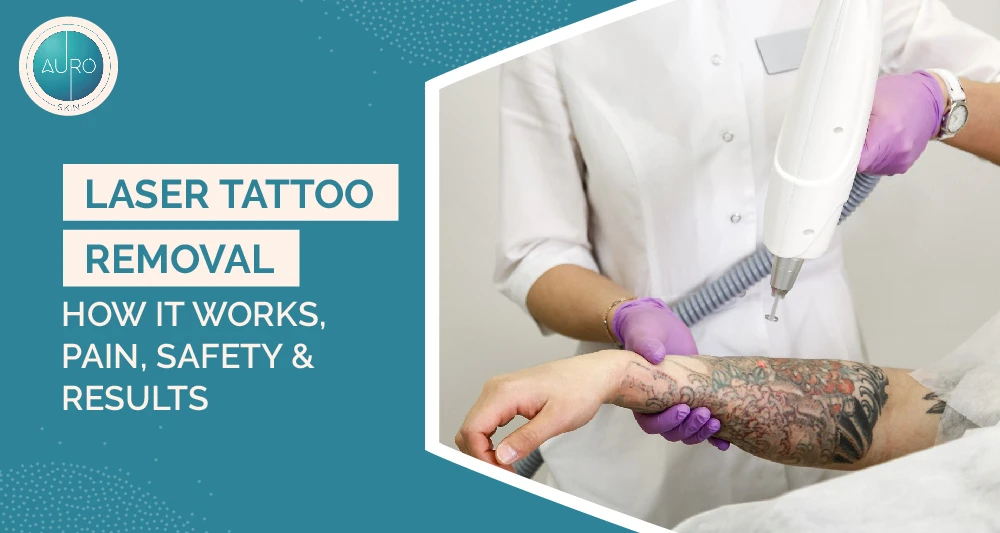
The laser tattoo removal session is a carefully planned medical process designed for safety, comfort, and effectiveness, and the key steps involved are as follows:
- Comprehensive Consultation: The doctor evaluates the patient’s skin type, tattoo size, ink colours, depth, and medical history to design a customised treatment plan.
- Preparation and Comfort Measures: A topical numbing cream may be applied. Cooling devices or chilled air are often used to reduce discomfort and protect the skin.
- Laser Selection and Parameter Setting: The appropriate laser type and wavelength are chosen based on pigment colour and skin tone to ensure effectiveness and safety.
- Sensation During Treatment: Patients commonly describe the feeling as similar to quick rubber band snaps against the skin, lasting only during the laser pulses.
- Session Duration: Most tattoo removal sessions are brief, typically ranging from a few minutes for small tattoos to around 20–30 minutes for larger areas.
- Immediate Skin Response: Temporary whitening (frosting), mild redness, and slight swelling are expected and usually settle within a few hours to days.
C] Why Does Laser Tattoo Removal Take Multiple Sessions and Time?
Tattoo removal is a staged medical process because ink particles are deposited at different depths within the skin. Professional tattoos often contain dense, layered pigment, which requires repeated treatments to reach and fragment all the ink.
After each session, the body needs time to naturally eliminate the broken particles through the lymphatic system. This healing phase is essential for both effective fading and skin recovery.
Treatments are usually spaced six to eight weeks apart to reduce the risk of complications and allow optimal clearance. Visible lightening occurs gradually over several months rather than immediately. Complete removal means the pigment is no longer visible to the naked eye, although in some cases only significant fading is achievable.
D] What Factors Affect Laser Tattoo Removal Results?
The outcome of laser tattoo removal varies from patient to patient due to several clinical, biological, and treatment-related factors, and the most important ones are listed below:
- Ink Colour: Black and dark green respond fastest, while lighter shades such as yellow and certain blues are more resistant.
- Tattoo Age: Older tattoos often fade more easily, as some pigment has already been naturally broken down by the body.
- Tattoo Location: Areas with better blood circulation, such as the upper body, show quicker clearance than extremities.
- Skin Tone: Laser settings are adjusted carefully to treat the pigment while protecting the surrounding skin.
- Immune Response: A healthy immune system supports faster removal of fragmented ink particles.
- Technology and Medical Expertise: Advanced laser systems and experienced doctors significantly influence both safety and final results.
Patients considering laser tattoo removal in Mumbai often seek a medically supervised approach that is precise, safe, and tailored to their skin type.
E] Which Types of Lasers Are Used for Tattoo Removal?
The choice of laser technology depends on the tattoo’s characteristics and the patient’s skin type, and the commonly used options include the following:
- Q-Switched Lasers: Considered the gold standard for many years, these lasers effectively treat a wide range of tattoo pigments and are widely used for other dermatological indications such as pigmentation and selected birthmarks.
- Picosecond (Pico) Lasers: Deliver ultra-short pulses that break ink into finer particles, particularly useful for resistant colours and previously treated tattoos.
- Wavelength-Based Targeting: Different wavelengths are selected for specific pigments—for example, 1064 nm for black and 532 nm for red tones.
- Precision and Skin Protection: Modern systems are designed to confine energy to the pigment, reducing the risk of unwanted skin injury.
- Customised Treatment Approach: Laser choice is based on the tattoo’s characteristics and the patient’s skin type for optimal outcomes.
F] Is Laser Tattoo Removal Safe, and What Are the Side Effects?
When performed under expert supervision, such as a dermatologist in Mumbai, the procedure has a strong safety profile, and the common effects and considerations are outlined below:
- Clinically Proven Safety: When performed by a qualified doctor, the procedure is considered safe and well tolerated.
- Common Temporary Effects: Redness, mild swelling, tenderness, and occasional blistering usually resolve within a few days.
- Rare Complications: Pigmentary changes or scarring are uncommon and can be minimised with correct technique and aftercare.
- Essential Aftercare: Sun protection, gentle cleansing, and avoiding friction help the skin heal properly.
- Realistic Outcome: Some tattoos clearly achieve 80-100% removal, while others show substantial fading rather than total removal.
Conclusion
Laser tattoo removal is a medically advanced procedure that gradually reduces unwanted pigment while preserving the surrounding skin. The number of sessions, the pace of fading, and the final outcome depend on several individual factors, making professional assessment essential. With the right technology and an experienced professional, the treatment is safe, structured, and predictable.
Setting realistic expectations and following aftercare advice play an important role in achieving the best possible result. If you are considering treatment, book an appointment at Auro Skin Clinic to understand the most suitable approach for your skin and tattoo.
FAQs